Tools you can use.
Executive Presentation
The Executive Presentation PowerPoint presentation that is specially prepared for the individual case by a Senior Organizational Engineer. You can download the PDF version here.
There is no completely standard executive presentation. Each is designed to focus on the issues particular to the team. The graphics draw from the Individual Strategic Style Analysis, TeamAnalysis, LeaderAnalysis and other "I Opt" reports. This is supplemented with information from the Organizational Engineering database as appropriate to the team conditions.
Other Reports
Report Details

The report typically includes two sets of recommendations. One is focused on the leader's relation to the team. The other centers on team dynamics. These may be drawn from the standard "I Opt" analytical reports but are usually are supplemented with unique insights that are inaccessible to the artificial intelligence built into the standard reports.
How "I Opt" Works

"I Opt" can be applied at various levels. The computer based report focus on individuals or on specific groups. However, the technology can reach much deeper.
The Executive Presentation uses the individual and group reports to prepare a slides suitable for a PowerPoint Presentation. It does this by summarizing the essential points from the various analyses available. Clients can do this part of the presentation themselves without reliance on Professional Communications Inc.
However, depending on the conditions specific analysis, PCI can introduce elements that lie outside of the reports. These might include comparisons from its database or observations appropriate to the level of the group being assessed (e.g., CEO vs functional manager).
Since each analysis is unique, there is no way of predicting how much value Professional Communications Inc. will add versus what can be done by the client without aid. It is suggested that clients interested in this service contact us before committing to this particular service.
The Executive Presentation PowerPoint presentation is designed to be used by consultants and professionals who are knowledge of "I Opt" and Organizational Engineering technology. The basic document provides no explanations except for a one sentence summary statement as a footing on each chart. More extensive notes can be included in the "Notes" section but at a premium cost.
The length of an Executive Presentation is governed by the issues revealed in the analysis. A typical presentation is between 20 and 30 individual slides. The slides are not numbered and contain no hyperlinked references. This means that clients can "cut and paste" the material to fit their precise needs.
The time needed for preparing the Executive Presentation varies. It is influenced by the issues revealed in the analysis, the time needed to research comparative data and the extent of explanations included. An uncomplicated, standard presentation is typically turned around in 48 to 72 hours.
Obtaining a Package
An Executive Presentation will require running all of the standard "I Opt" Reports. Depending on the situation, multiple runs may be required to mix and match different combinations of people in order to address particular issues.
Clients can obtain the report from Professional Communications Inc. (the owner of "I Opt" technology) by submitting the needed data in any manner preferred (e.g., email, fax, surface mail, private courier, telephone, etc.). Contact us for more information.
Report Contents

Report Contents
The Executive Presentation is constructed by Professional Communications Inc. staff in their Ann Arbor, MI offices. Each presentation is based on analysis of the team information that includes but is not limited to the issues revealed by the normal "I Opt" reports.
The Executive Presentation contains graphics, tables and listings appropriate to the issues being addressed. These will normally include, but are not limited to, extracts from the various "I Opt" reports. However, the presentation will typically divide up into two sections.
Section 1: The Leader
The first section analyzes the Leader as an individual and in relation to the people in the team being lead. It normally includes comparisons of the leader to the general corporate population, to other leaders and to the actual members of the team.
This section concludes with a one or two page summary of recommendations for consideration. These may include observations made in other reports but can include issues that beyond the reach of the artificial intelligence imbedded in the computer based analysis.
Section 2: The Team
The second section focuses on the dynamics of the team as an entity. It considers the team as a whole, potential coalitions within the team and the likely relations of individual team members with each other.
This section concludes with a 3 page summary of observations and recommendations. It includes a listing of probable strengths and vulnerabilities. It also includes a page of recommendations for the team to consider.
Roll Over Thumbnails for More Information

Executive Presentation Thumbnails
The Executive Presentation is designed for use with Senior Management by people familiar with the "I Opt" and Organizational Engineering technology. The document draws on information from other "I Opt" reports and is supplemented with comparative/analytical data from a database of prior analyses.
The document is individually prepared for each case. The analyses is sensitive to the issues inherent in the team structure and to the organization level of the team within the larger structure.
Section 1: The Leader
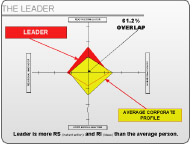
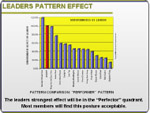
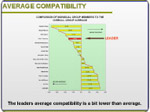
The first section of the presentation focuses on the leader. It considers the leader in relation to the "average" corporate citizen, to other leaders and to the team that is being lead. The specific graphics included can be drawn from other " I Opt" reports. These are typically supplemented with other graphics, tables and listings that illustrate a particular issue or condition.
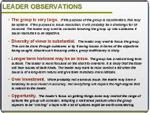
The report concludes with recommendations for the leader to consider in guiding the team. These recommendations can be sensitive and appropriate to the organizational level of the leader (e.g., manager, director, VP, CEO, etc.).
Section 1: The Leader
The first section of the presentation focuses on the leader. It considers the leader in relation to the "average" corporate citizen, to other leaders and to the team that is being lead. The specific graphics included can be drawn from other " I Opt" reports. These are typically supplemented with other graphics, tables and listings that illustrate a particular issue or condition.
The report concludes with recommendations for the leader to consider in guiding the team. These recommendations can be sensitive and appropriate to the organizational level of the leader (e.g., manager, director, VP, CEO, etc.).
Section 1: The Leader
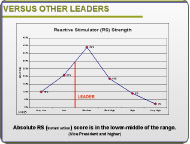
The first section of the presentation focuses on the leader. It considers the leader in relation to the "average" corporate citizen, to other leaders and to the team that is being lead. The specific graphics included can be drawn from other " I Opt" reports. These are typically supplemented with other graphics, tables and listings that illustrate a particular issue or condition.
The report concludes with recommendations for the leader to consider in guiding the team. These recommendations can be sensitive and appropriate to the organizational level of the leader (e.g., manager, director, VP, CEO, etc.).
Section 1: The Leader
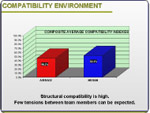
The first section of the presentation focuses on the leader. It considers the leader in relation to the "average" corporate citizen, to other leaders and to the team that is being lead. The specific graphics included can be drawn from other " I Opt" reports. These are typically supplemented with other graphics, tables and listings that illustrate a particular issue or condition.
The report concludes with recommendations for the leader to consider in guiding the team. These recommendations can be sensitive and appropriate to the organizational level of the leader (e.g., manager, director, VP, CEO, etc.).
Section 1: The Leader
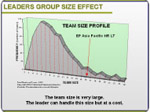
The first section of the presentation focuses on the leader. It considers the leader in relation to the "average" corporate citizen, to other leaders and to the team that is being lead. The specific graphics included can be drawn from other " I Opt" reports. These are typically supplemented with other graphics, tables and listings that illustrate a particular issue or condition.
The report concludes with recommendations for the leader to consider in guiding the team. These recommendations can be sensitive and appropriate to the organizational level of the leader (e.g., manager, director, VP, CEO, etc.).
Section 1: The Leader
The first section of the presentation focuses on the leader. It considers the leader in relation to the "average" corporate citizen, to other leaders and to the team that is being lead. The specific graphics included can be drawn from other " I Opt" reports. These are typically supplemented with other graphics, tables and listings that illustrate a particular issue or condition.
The report concludes with recommendations for the leader to consider in guiding the team. These recommendations can be sensitive and appropriate to the organizational level of the leader (e.g., manager, director, VP, CEO, etc.).
Section 1: The Leader
The first section of the presentation focuses on the leader. It considers the leader in relation to the "average" corporate citizen, to other leaders and to the team that is being lead. The specific graphics included can be drawn from other " I Opt" reports. These are typically supplemented with other graphics, tables and listings that illustrate a particular issue or condition.
The report concludes with recommendations for the leader to consider in guiding the team. These recommendations can be sensitive and appropriate to the organizational level of the leader (e.g., manager, director, VP, CEO, etc.).
Section 1: The Leader
The first section of the presentation focuses on the leader. It considers the leader in relation to the "average" corporate citizen, to other leaders and to the team that is being lead. The specific graphics included can be drawn from other " I Opt" reports. These are typically supplemented with other graphics, tables and listings that illustrate a particular issue or condition.
The report concludes with recommendations for the leader to consider in guiding the team. These recommendations can be sensitive and appropriate to the organizational level of the leader (e.g., manager, director, VP, CEO, etc.).
Section 2: The Group
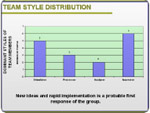
The second section focuses on the team as a team. It considers the team member relationships with each other, potential coalitions and other subgroups as well as the team functioning as a single unit. A majority of the graphics are drawn from other "I Opt" reports. Specialized graphics, listing, tables and assessments are incorporated as appropriate to the issues diagnosed.
This section of the report concludes with a 3 (or 4) page summary. A listing of the strengths and vulnerabilities centers the group attention on matters to be addressed (i.e., either offset or magnified). An additional one or two pages is given to specific recommendations that the team can consider. Like the leader section, the observations in this section are sensitive to the organizational level of the people on the team.
Section 2: The Group
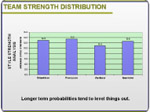
The second section focuses on the team as a team. It considers the team member relationships with each other, potential coalitions and other subgroups as well as the team functioning as a single unit. A majority of the graphics are drawn from other "I Opt" reports. Specialized graphics, listing, tables and assessments are incorporated as appropriate to the issues diagnosed.
This section of the report concludes with a 3 (or 4) page summary. A listing of the strengths and vulnerabilities centers the group attention on matters to be addressed (i.e., either offset or magnified). An additional one or two pages is given to specific recommendations that the team can consider. Like the leader section, the observations in this section are sensitive to the organizational level of the people on the team.
Section 2: The Group
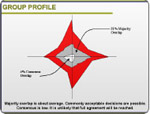
The second section focuses on the team as a team. It considers the team member relationships with each other, potential coalitions and other subgroups as well as the team functioning as a single unit. A majority of the graphics are drawn from other "I Opt" reports. Specialized graphics, listing, tables and assessments are incorporated as appropriate to the issues diagnosed.
This section of the report concludes with a 3 (or 4) page summary. A listing of the strengths and vulnerabilities centers the group attention on matters to be addressed (i.e., either offset or magnified). An additional one or two pages is given to specific recommendations that the team can consider. Like the leader section, the observations in this section are sensitive to the organizational level of the people on the team.
Section 2: The Group
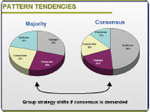
The second section focuses on the team as a team. It considers the team member relationships with each other, potential coalitions and other subgroups as well as the team functioning as a single unit. A majority of the graphics are drawn from other "I Opt" reports. Specialized graphics, listing, tables and assessments are incorporated as appropriate to the issues diagnosed.
This section of the report concludes with a 3 (or 4) page summary. A listing of the strengths and vulnerabilities centers the group attention on matters to be addressed (i.e., either offset or magnified). An additional one or two pages is given to specific recommendations that the team can consider. Like the leader section, the observations in this section are sensitive to the organizational level of the people on the team.
Section 2: The Group
The second section focuses on the team as a team. It considers the team member relationships with each other, potential coalitions and other subgroups as well as the team functioning as a single unit. A majority of the graphics are drawn from other "I Opt" reports. Specialized graphics, listing, tables and assessments are incorporated as appropriate to the issues diagnosed.
This section of the report concludes with a 3 (or 4) page summary. A listing of the strengths and vulnerabilities centers the group attention on matters to be addressed (i.e., either offset or magnified). An additional one or two pages is given to specific recommendations that the team can consider. Like the leader section, the observations in this section are sensitive to the organizational level of the people on the team.
Section 2: The Group
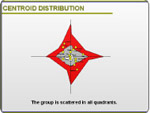
The second section focuses on the team as a team. It considers the team member relationships with each other, potential coalitions and other subgroups as well as the team functioning as a single unit. A majority of the graphics are drawn from other "I Opt" reports. Specialized graphics, listing, tables and assessments are incorporated as appropriate to the issues diagnosed.
This section of the report concludes with a 3 (or 4) page summary. A listing of the strengths and vulnerabilities centers the group attention on matters to be addressed (i.e., either offset or magnified). An additional one or two pages is given to specific recommendations that the team can consider. Like the leader section, the observations in this section are sensitive to the organizational level of the people on the team.
Section 2: The Group
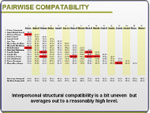
The second section focuses on the team as a team. It considers the team member relationships with each other, potential coalitions and other subgroups as well as the team functioning as a single unit. A majority of the graphics are drawn from other "I Opt" reports. Specialized graphics, listing, tables and assessments are incorporated as appropriate to the issues diagnosed.
This section of the report concludes with a 3 (or 4) page summary. A listing of the strengths and vulnerabilities centers the group attention on matters to be addressed (i.e., either offset or magnified). An additional one or two pages is given to specific recommendations that the team can consider. Like the leader section, the observations in this section are sensitive to the organizational level of the people on the team.
Section 2: The Group
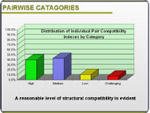
The second section focuses on the team as a team. It considers the team member relationships with each other, potential coalitions and other subgroups as well as the team functioning as a single unit. A majority of the graphics are drawn from other "I Opt" reports. Specialized graphics, listing, tables and assessments are incorporated as appropriate to the issues diagnosed.
This section of the report concludes with a 3 (or 4) page summary. A listing of the strengths and vulnerabilities centers the group attention on matters to be addressed (i.e., either offset or magnified). An additional one or two pages is given to specific recommendations that the team can consider. Like the leader section, the observations in this section are sensitive to the organizational level of the people on the team.
Section 2: The Group
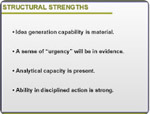
The second section focuses on the team as a team. It considers the team member relationships with each other, potential coalitions and other subgroups as well as the team functioning as a single unit. A majority of the graphics are drawn from other "I Opt" reports. Specialized graphics, listing, tables and assessments are incorporated as appropriate to the issues diagnosed.
This section of the report concludes with a 3 (or 4) page summary. A listing of the strengths and vulnerabilities centers the group attention on matters to be addressed (i.e., either offset or magnified). An additional one or two pages is given to specific recommendations that the team can consider. Like the leader section, the observations in this section are sensitive to the organizational level of the people on the team.
Section 2: The Group
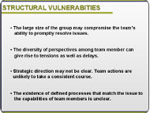
The second section focuses on the team as a team. It considers the team member relationships with each other, potential coalitions and other subgroups as well as the team functioning as a single unit. A majority of the graphics are drawn from other "I Opt" reports. Specialized graphics, listing, tables and assessments are incorporated as appropriate to the issues diagnosed.
This section of the report concludes with a 3 (or 4) page summary. A listing of the strengths and vulnerabilities centers the group attention on matters to be addressed (i.e., either offset or magnified). An additional one or two pages is given to specific recommendations that the team can consider. Like the leader section, the observations in this section are sensitive to the organizational level of the people on the team.
Section 2: The Group
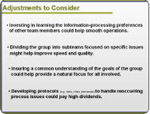
The second section focuses on the team as a team. It considers the team member relationships with each other, potential coalitions and other subgroups as well as the team functioning as a single unit. A majority of the graphics are drawn from other "I Opt" reports. Specialized graphics, listing, tables and assessments are incorporated as appropriate to the issues diagnosed.
This section of the report concludes with a 3 (or 4) page summary. A listing of the strengths and vulnerabilities centers the group attention on matters to be addressed (i.e., either offset or magnified). An additional one or two pages is given to specific recommendations that the team can consider. Like the leader section, the observations in this section are sensitive to the organizational level of the people on the team.